Jewellery Care 101: How to Clean and Store Pieces by Metal & Stone
Safe, practical cleaning and storage—by metal and gemstone—with clear do/don’t rules and pro-care signals.
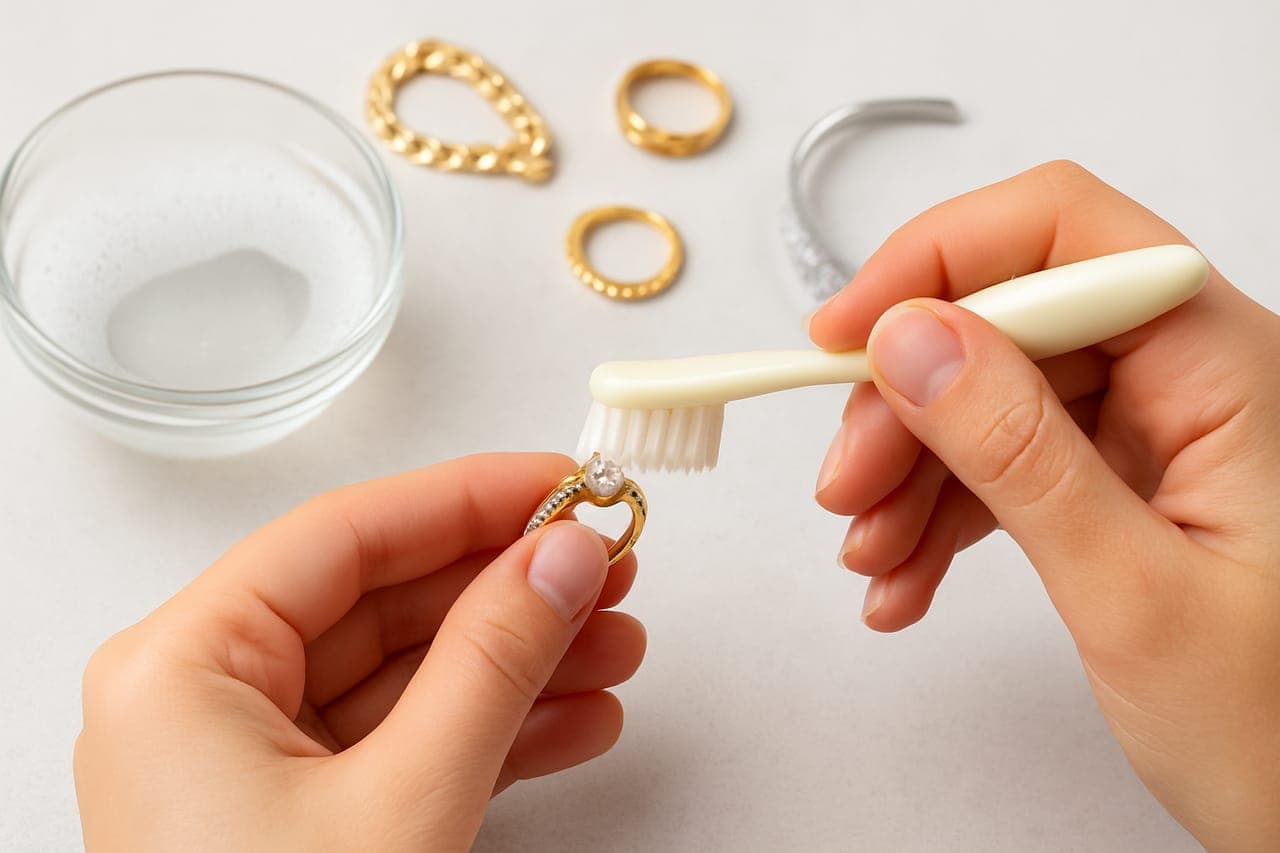
The safest starting point for many intact pieces is warm water, a drop of mild dish soap, and a soft brush, then a careful rinse and dry. The exceptions are what matter: organic, fracture-filled, treated, or otherwise delicate gems need material-specific handling. The canonical three-step method and Mohs lookup live in Jewellery Care; this field note handles compatibility, storage, and professional-care signals.
Safety first (what to check before any cleaning)
Inspect prongs, settings, and strings; loose stones or cracked enamel need a pro.
Before cleaning, do a shake test: hold jewellery close to your ear; if you hear a rattle, stop. Tug gently with a lint-free cloth; if fibres catch, prongs may be worn. Cracked enamel or loose pearls should go straight to a jeweller.
Caution: DIY cleaning on damaged jewellery risks stone loss.
Universal quick clean (the mild-soap method)
Use the canonical care method only after checking the material, treatment, and setting.
The three-step Jewellery Care method owns the basic procedure. Before using it, confirm that the piece is intact and that its stones, treatments, stringing, glue, enamel, or plating tolerate water and light brushing. Skip soaking when the material is uncertain.
Pro Tip: Always plug the sink drain first; rings bounce.
Metals guide (gold, silver, platinum, steel, vermeil, plated)
Pure metals are tougher; plated/vermeil need gentle, short contact and no abrasives.
- Gold (14k–24k): mild soap works; avoid abrasives
- Silver: use silver cloth for tarnish; dips only sparingly
- Platinum/steel: very durable, mild soap fine
- Vermeil/plated: wipe only; no soaking or scrubbing
Do: Store silver with anti-tarnish strips to slow oxidation.
Stones guide by hardness/porosity
Hard stones tolerate more; porous/soft stones need kid gloves.
- Durable when untreated and securely set: diamond, sapphire, ruby → mild soap is the conservative home option
- Delicate, organic, treated, or commonly fracture-filled: emerald, opal, turquoise, pearl, amber, coral → avoid steam and ultrasonic cleaning unless a qualified jeweller confirms otherwise
Caution: Never soak pearls. Moisture trapped in the drill hole can discolour them. Wipe with a slightly damp cloth, then dry thoroughly.
Ultrasonic & steam cleaners (when they’re safe—and not)
Great for sturdy, tightly set diamonds; unsafe for porous, included, or fracture-filled stones.
Ultrasonics clean with vibration; steam uses heat and pressure. Some untreated, durable gems in secure settings may tolerate them, but treatments, inclusions, fracture filling, heat sensitivity, glue, and loose settings change the answer. Emerald fractures are commonly filled with oil, resin, or wax, and organic materials such as pearls, coral, and amber can be damaged. When durability is uncertain, leave the machine off and ask a jeweller.
Do: Ask your jeweller if your warranty allows ultrasonic cleaning.
What NOT to use (myths & risky hacks)
Skip toothpaste, baking soda scrubs, bleach, acetone on organic/porous stones.
- Toothpaste/baking soda: abrasive scratches
- Bleach/acetone: weaken alloys and damage gems
- Boiling water: cracks porous stones
Storage that prevents damage
Dry, separate, padded; stop chains from knotting and silver from tarnishing fast.
- Use lined boxes with compartments
- Store silver in anti-tarnish pouches
- Add silica packs to absorb moisture
- Travel: padded roll or zip pouch
Routine care schedules (daily / monthly / yearly)
Wipe daily, deep clean monthly, pro check yearly (or after snags/impacts).
- Daily: quick wipe with soft cloth
- Monthly: mild soap soak + brush
- Yearly: jeweller inspection + polish
When to see a pro (red flags & estimates)
Loose settings, missing stones, cracks, extreme tarnish, worn plating: professional inspection.
Jewellers can tighten prongs, restring pearls, polish, and replate. Turnaround may be days to weeks depending on the job.
Quick troubleshooting scenarios
Short, actionable fixes or “stop and see a pro.”
- Green finger marks: polish inside band; use barrier
- Cloudy diamond: mild soap soak + brush
- Tangled chains: use a pin + baby powder
- Oxidised silver: silver cloth or pro dip
- Dull pearls: wipe only; see a pro if chalky
Cleaning Compatibility Matrix
A matrix for metals and stones with safe methods, what to avoid, and pro-needed cues.
| Material/stone | Safe method | Avoid | Notes | Pro needed when… |
|---|---|---|---|---|
| Gold (14k–24k) | Mild soap soak | Abrasives | Durable | Deep scratches |
| Silver | Polishing cloth; mild soap if suitable | Toothpaste, unlabelled dips | Can tarnish | Deep or uneven tarnish |
| Platinum/steel | Mild soap | Strong acids | Very durable | Resizing needed |
| Diamonds | Mild soap if untreated and secure | Chlorine; ultrasonic when treatment or setting is uncertain | Hard but settings still wear | Loose setting |
| Pearls | Damp cloth only | Soak, steam | Organic, porous | String frays |
| Opal/emerald | Material-specific gentle care | Ultrasonic, steam | Often delicate or treated | Cracks or treatment uncertainty |
| Turquoise/amber | Damp cloth | Heat, chemicals | Very porous | Discolouration |
Key Takeaways
Fast reminders for safe cleaning and storage at home.
- Always inspect before cleaning
- Mild soap + soft brush is a common starting method, not a universal guarantee
- Avoid harsh chemicals, abrasives, and risky hacks
- Porous stones need minimal moisture; pearls never soak
- Store dry, padded, and separate to prevent scratches
- See a pro yearly or sooner if issues arise
Frequently asked
- Is toothpaste safe for jewellery?
- No. Toothpaste is abrasive and can scratch metals and stones, especially softer gems like opals or turquoise. Use mild soap and water instead.
- How do I clean a diamond ring at home?
- Soak in warm water with mild soap, brush gently with a soft toothbrush, rinse, and dry with a lint-free cloth. Avoid bleach and harsh chemicals.
- Can I use an ultrasonic cleaner for pearls or opals?
- No. Ultrasonic cleaners can damage porous or delicate stones such as pearls, opals, emeralds, and turquoise. They are safe for sturdy diamonds in secure settings.
- How do I store silver to prevent tarnish?
- Keep silver in anti-tarnish pouches or cloth, store it dry, and add silica gel or anti-tarnish strips to reduce oxidation.
- How often should I get jewellery inspected?
- Once a year is a good rule of thumb. Go sooner if you notice loose stones, worn prongs, or heavy tarnish.
Sources
- Tips on Caring for Jewelry · Gemological Institute of America · Accessed
- Ultrasonic Cleaners for Gems: What You Need to Know · Gemological Institute of America · Accessed