Hatton Garden
Britain's diamond quarter and the heart of its bespoke engagement-ring trade — once the marketplace for as much as 90% of the world's diamonds
Dealing & bespoke
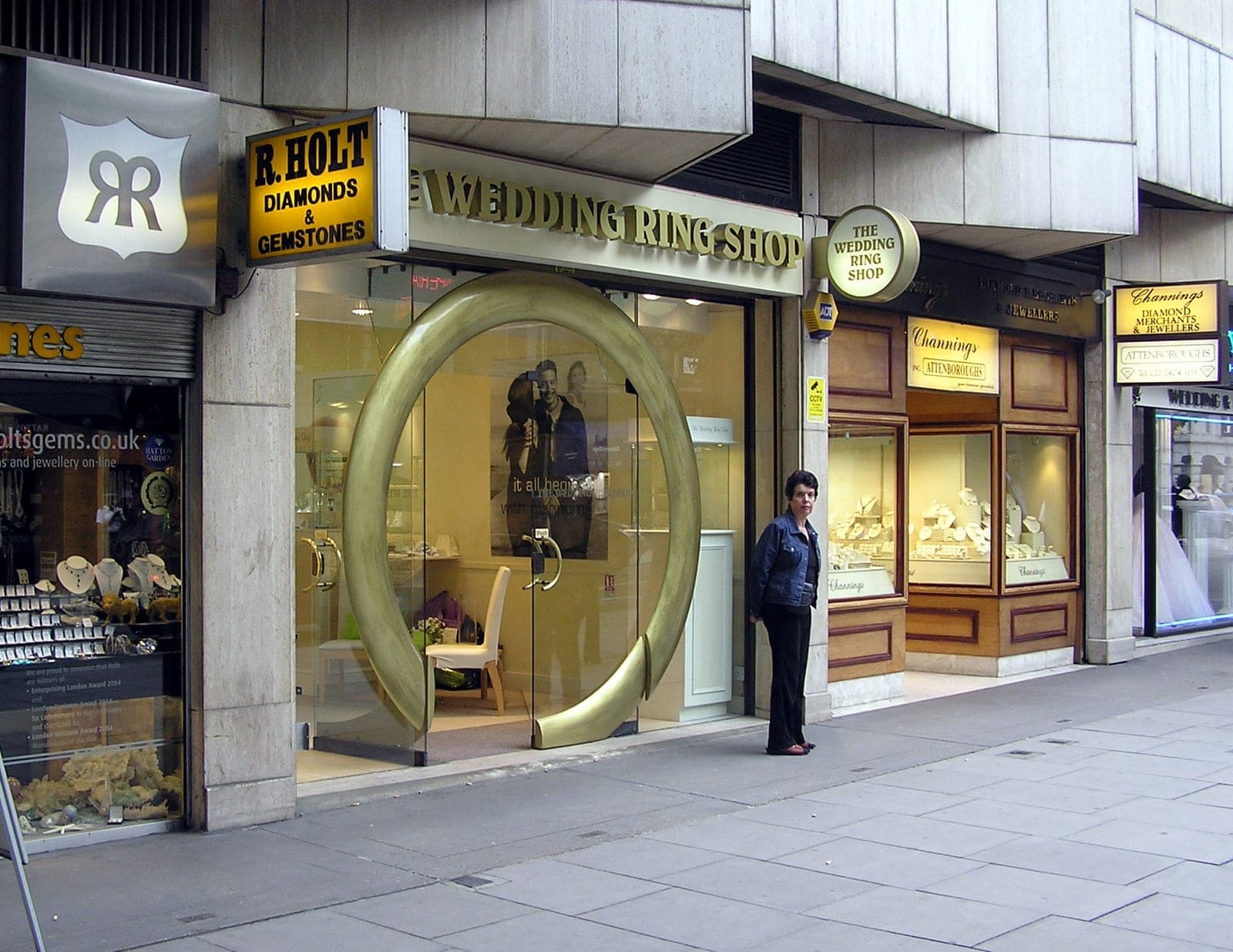
Hatton Garden is Britain's diamond quarter — for more than a century the centre of the UK jewellery trade, tucked between Holborn and Clerkenwell. At its historical peak, as much as 90% of the world's diamond supply was marketed through these few streets.
The trade grew here in the early 1800s, spreading from the older craft workshops of neighbouring Clerkenwell. Its rise to a world centre came with the southern-African diamond discoveries of the 1870s–80s: the London Diamond Syndicate — ten firms based around the Garden — controlled the distribution of rough stones and pulled the heart of the diamond trade from Amsterdam to London. Successive waves of immigrant craftspeople, many of them Jewish jewellers who had fled persecution in Eastern Europe and Russia, built a close-knit, multilingual community whose café-table dealing eventually became the London Diamond Bourse.
From the 1960s the bench work increasingly moved overseas and the district turned toward what it is best known for today: retail and, above all, bespoke commissioning. It remains the UK's largest single cluster of jewellery retailers — the place Britain goes to have an engagement ring made — with much of the real trade still running on introductions and reputation through the workshops and dealing rooms behind the shopfronts.
Planning to visit or buy in Hatton Garden?
Getting there and when to go, what a fair price looks like, how to verify what you're buying, and how to spot a fake — the practical, no-nonsense guide.
Read the buyer's guideWorked here
A gemstone is rarely mined, cut, dealt and sold in the same place — those are four different trades. Here is Hatton Garden's part in that journey: the stones it handles, and exactly what it does with each.
- Cut
- faceted, carved or finished here
- Trade
- dealt and wholesaled here
- Sell
- sold to the public here
- DiamondCutTradeSell
Britain mines no diamonds, but London has dealt them since the late 1800s — and Hatton Garden was where the modern trade was built: in 1889 ten Hatton Garden merchants struck the deal to distribute De Beers' rough, and for some eighty years nearly every rough diamond entering Britain passed through a handful of offices here (De Beers only moved its London sorting to Botswana in 2013). Today it is Britain's engagement-ring heart — hundreds of retailers and bench workshops — with lab-grown now a major line beside natural. Almost nothing is cut here at scale anymore; the district trades, sets, and sells.
The diamond gemstone
Makers & Houses
Hatton Garden is London's diamond and jewellery quarter: roughly 300 jewellery businesses and around 55 shopfronts where a person can buy a certificated diamond, choose an antique ring, or commission a bespoke piece made on-site.
- African & global minesSource
- Antwerp (cutting)Cut
- Hatton GardenSell
Hirschfelds
Known for antique Victorian, Edwardian and Art Deco jewellery, certificated loose diamonds, and antique or bespoke engagement rings
One of Hatton Garden's oldest continuously trading names, dealing in jewellery and diamonds for around 150 years. Its antique specialism anchors the district's Victorian and Edwardian ring heritage.
The London Victorian Ring Co.
Known for genuine Victorian, Edwardian and Art Deco antique engagement and wedding rings, plus vintage-style bespoke commissions
A fourth-generation family firm dedicated to vintage and antique-style engagement rings since 1890, one of the clearest living links to the district's Victorian ring tradition.
Holts Gems
Known for loose diamonds and coloured gemstones, finished fine jewellery, and bespoke engagement rings; gem cutting via its Holts Lapidary arm
Founded in 1948 by Robert Holt, a pre-war refugee from Vienna who trained as a diamond polisher in Clerkenwell. One of the district's longest-standing gem-and-diamond houses.
E Katz & Co
Known for diamond engagement rings, wedding and fine jewellery, from an independent family diamond dealer with direct sales and commissions
Founded in 1946 by Emil Katz, who reached Britain in 1939 with diamonds his mother had sewn into his suit. Still an independent family business at 88 to 90 Hatton Garden since 1955.
Rennie & Co
Known for diamond and coloured-gemstone engagement, wedding and eternity rings, and bespoke fine jewellery, designed and made in-house
A family-run Hatton Garden jeweller since 1958, now third-generation, that still makes on-site rather than outsourcing.
Queensmith
Known for made-to-order diamond engagement rings, wedding and fine jewellery, each crafted in their own Hatton Garden workshop
A showroom-plus-workshop that crafts every ring in-house, in contrast with the many district retailers that outsource production.
The Diamond Shop
Known for bespoke diamond engagement rings and fine jewellery, designed and made in a Hatton Garden studio; loose-diamond sourcing
A bespoke diamond retailer designing engagement rings from a Hatton Garden studio for over 30 years.
Holts Lapidary
Known for gemstone cutting, re-cutting, faceting and polishing, plus loose cut gemstones for consumers and the trade
One of the few places a consumer can have a gemstone cut or re-cut in the district, extending Holts' 1948 lineage into the Cut side of the trade.
Hatton Garden Diamond
Known for bespoke diamond engagement rings and fine jewellery, loose diamonds and made-to-commission designs
A family-run Hatton Garden diamond house creating bespoke engagement rings since 1982, per its own site.
Daniel Christopher Jewellery
Known for bespoke engagement rings, wedding bands, eternity and signet rings, made to commission; loose diamonds and remodelling
A consumer-facing bespoke jeweller with a live Hatton Garden presence, describing itself as a jeweller since 1960.
- Simon Lewis Jewellers · master jeweller, handmade bespoke on-site for 30+ years (62 Hatton Garden)
- London Diamond Bourse. The trade's London diamond exchange, founded 1940. Industry infrastructure, not a shop.
- The Goldsmiths' Company Assay Office. A hallmarking office on Greville Street guaranteeing precious-metal purity. Not a retailer.
- The Goldsmiths' Centre. A training and workspace charity for the trade; some makers rent benches here.
- De Beers (historical link). Marketed much of the world's diamonds through the area historically. The “syndicate formed at No.10 in 1889” story is widely repeated but unverified.
- District context. About 300 jewellery businesses and 55 shopfronts; the trade was substantially built by Jewish refugee craftsmen fleeing persecution in Europe.
On the map
- London Diamond Bourse (100 Hatton Garden)
- Leather Lane market
- Ely Place & St Etheldreda's
- Clerkenwell (the older craft quarter)