Birmingham Jewellery Quarter
Britain's jewellery workshop — Europe's largest jewellery-trade cluster, maker of ~40% of UK jewellery, and home of the world's largest assay office and its Anchor hallmark
Making & hallmarking
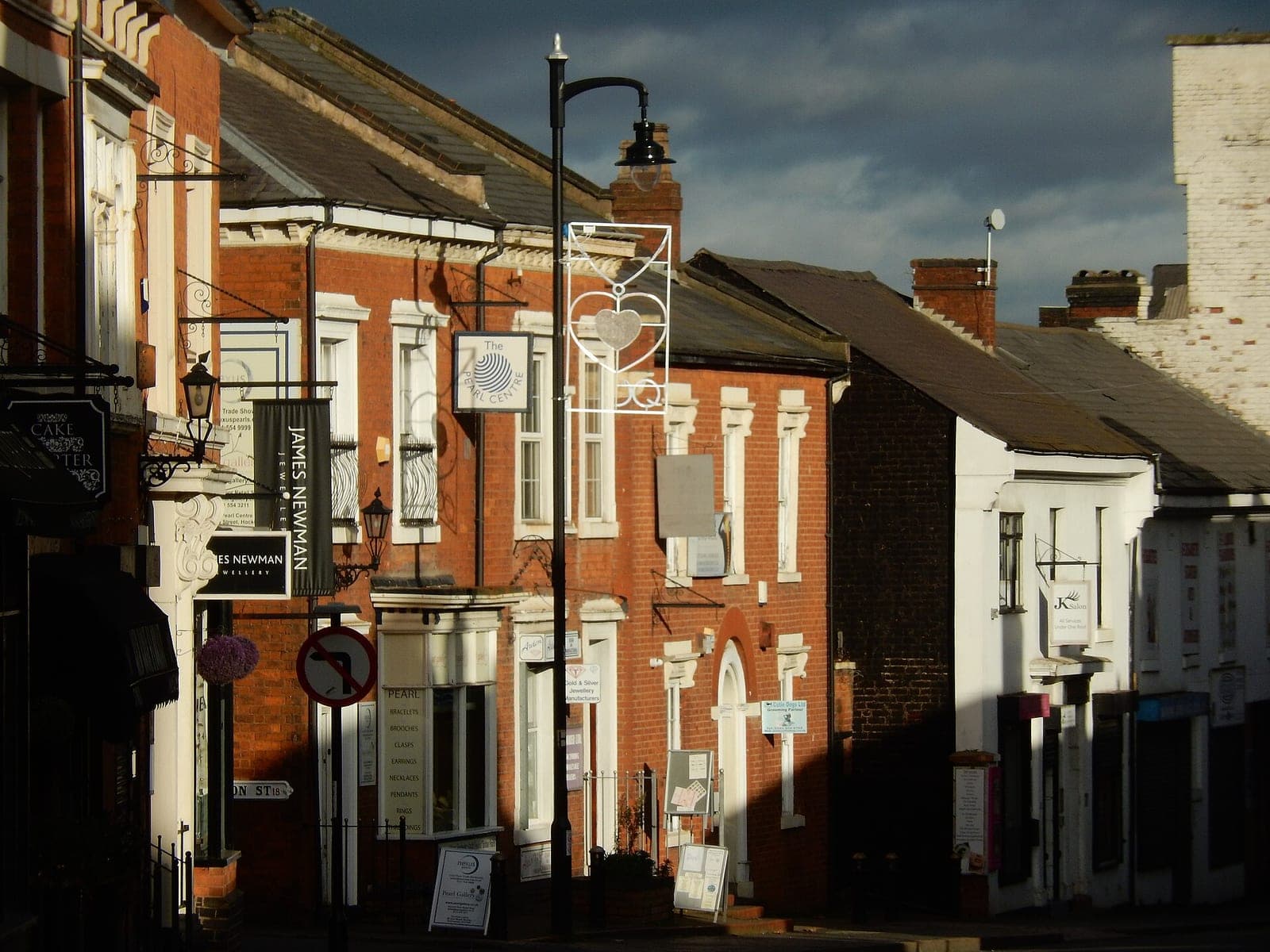
If Hatton Garden is where Britain buys jewellery, the Jewellery Quarter is where Britain makes it. This dense grid of Georgian and Victorian workshops north-west of Birmingham city centre is Europe's largest concentration of businesses in the jewellery trade, and still produces around 40% of all the jewellery made in the UK.
It grew out of industrial Birmingham. The Colmore family released the land in the mid-1700s; the metal trades gradually filled the new Georgian streets, and in 1773 Matthew Boulton and fellow industrialists won an Act of Parliament establishing the Birmingham Assay Office — so local silver no longer had to travel to Chester or London to be hallmarked. (A coin toss with Sheffield is said to have given Birmingham its Anchor mark.) The Quarter became an innovation centre too: electroplating was commercialised here in the mid-19th century, and at its peak the trades employed some 70,000 people.
Today more than 700 jewellers and independent businesses work here — bench makers, casters, setters, designer-makers, and the suppliers who serve them — alongside the Assay Office, still the world's largest by volume, hallmarking around 12 million items a year under the Anchor. In 2025 the Quarter was named a World Craft City.
What makes it singular is that it survived intact. English Heritage calls it a combination of jewellery and metalworking structures "which does not seem to exist anywhere else in the world" — a working district you can still read like an open-air museum.
Planning to visit or buy in Birmingham Jewellery Quarter?
Getting there and when to go, what a fair price looks like, how to verify what you're buying, and how to spot a fake — the practical, no-nonsense guide.
Read the buyer's guideMakers & Houses
The Jewellery Quarter runs the full metal front of the journey inside one square mile: Cookson mills bullion and alloys, the making houses work it at the bench, and every finished piece is struck with the Anchor hallmark the Birmingham Assay Office has applied here since 1773.
- Recovered / recycled goldSource
- Jewellery QuarterAlloy
- Jewellery QuarterMake
Deakin & Francis
Known for hand-made cufflinks in silver and vitreous enamel
England's oldest manufacturing family jeweller, operating from the same Regent Place building since the Industrial Revolution and still run by the Deakin family. One of the few firms still mastering vitreous enamelling, fusing glass to metal at high temperature.
Thomas Fattorini
Known for medals, civic insignia, ceremonial swords and trophies, including the current FA Cup
A designer-maker of awards, civic regalia and medals since 1827, the firm opened its first Jewellery Quarter factory in 1919. It made the current FA Cup and the Rugby League Challenge Cup, both in use today.
Cookson Precious Metals
CooksongoldKnown for precious-metal bullion in sheet, wire, tube, grain and solder, and casting including 100% recycled gold
From Vittoria Street, Cookson recovers precious-metal scrap and feeds refined bullion and gold, silver and platinum alloys, cut to order, to the benches around it, over 100 years of valuing, melting and assaying.
- The Birmingham Assay Office. One of only four surviving UK assay offices, striking the Anchor hallmark since 31 August 1773. The Verify anchor of the Quarter.
- Elkington & Co. Patented commercial electroplating here in 1840, founding the electroplate industry. Defunct, absorbed into Delta Metal Co in 1956.
On the map
- Birmingham Assay Office (the Anchor)
- Museum of the Jewellery Quarter, Vyse Street
- St Paul's Square
- The Chamberlain Clock
- The Pen Museum & The Coffin Works
In the district
Walk the district
Traveller notes
The Quarter is one of the few jewellery districts you can read like an open-air museum — its workshops and factory buildings survive largely intact, and the heart of it is walkable in an afternoon.
- Museum of the Jewellery Quarter on Vyse Street — the Smith & Pepper workshop, left exactly as it was when it closed in 1981.
- St Paul's Square — the Grade I-listed Georgian church where Matthew Boulton and James Watt worshipped.
- The Chamberlain Clock at the Vyse Street / Frederick Street crossroads — the Quarter's landmark.
- The Pen Museum and The Coffin Works — proof the Quarter made far more than jewellery.