Grand Bazaar Jewellery Lanes
One of the world's oldest and largest covered markets — a gold-and-jewellery bazaar since the 1450s, built around the original "Bedesten of Gems"
Market & bazaar
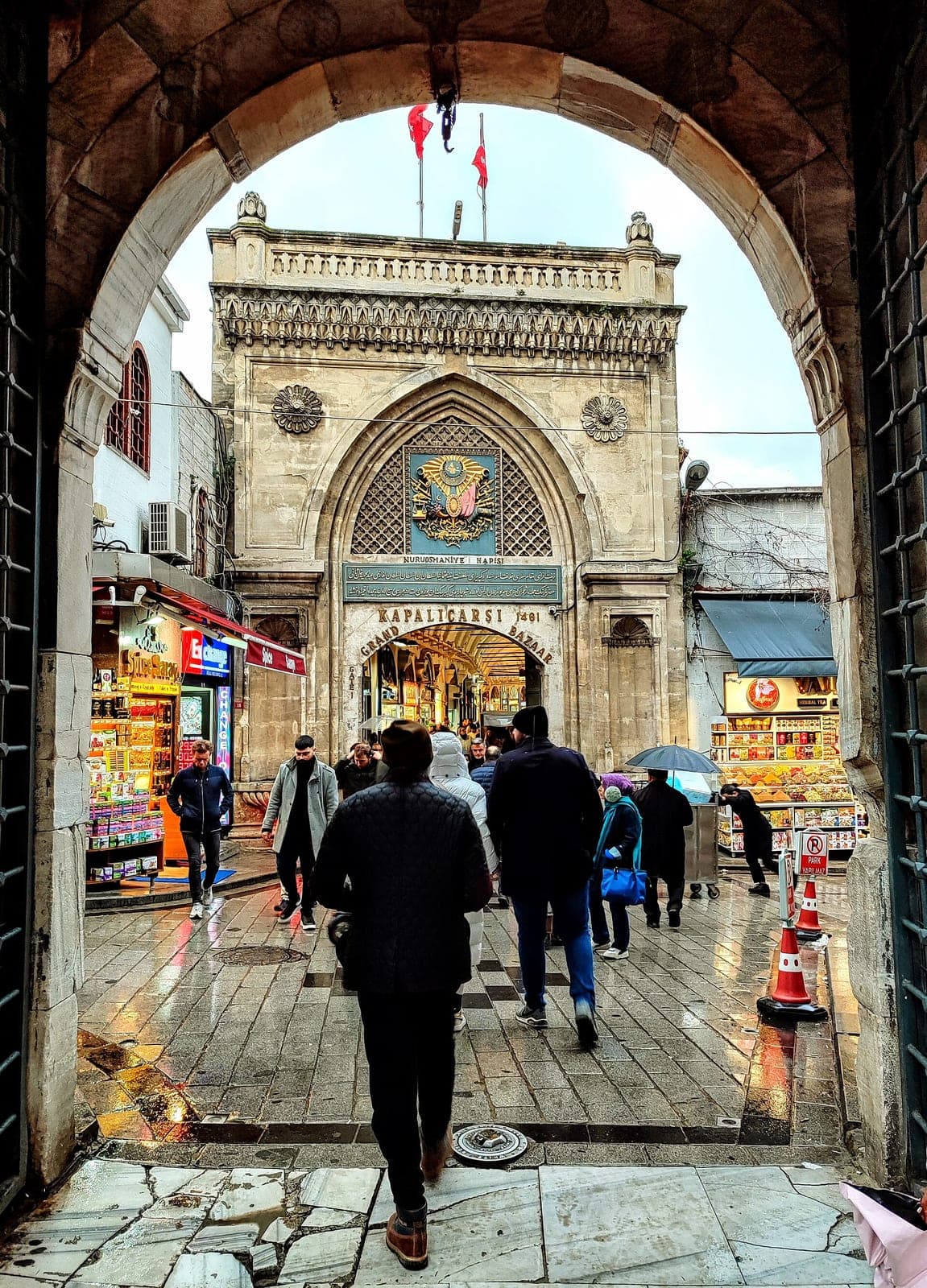
The Grand Bazaar — Kapalıçarşı, the "Covered Market" — is one of the oldest and largest covered markets in the world, and it has been a gold-and-jewellery market from the very beginning. Its historic heart was literally a "Bedesten of Gems": precious goods were the founding trade.
Mehmed the Conqueror had it built soon after the 1453 fall of Constantinople — construction began in the winter of 1455–56 and the core structure was finished by 1460–61. It grew around two great vaulted halls into the labyrinth of today by the early 1600s, surviving a long history of fires and the 1894 earthquake.
The jewellery geography is still legible. The Cevahir Bedesten — the İç, or Inner, Bedesten — is the secure vaulted core, 44 windowless cellars where the most precious wares were kept and where jewellers, armourers, and crystal dealers traded. Today the gold and jewellery trade concentrates along Kalpakçılar Caddesi, the bazaar's "gold jewellers' road."
It remains overwhelming in scale: 61 covered streets, some 4,000 shops, and 18 gates, drawing between a quarter and four hundred thousand visitors a day. Gold is often sold by weight against the daily rate, the trade still runs on guilds and haggling, and — as it always has — the most precious pieces stay in the cabinets until you ask.
Planning to visit or buy in Grand Bazaar Jewellery Lanes?
Getting there and when to go, what a fair price looks like, how to verify what you're buying, and how to spot a fake — the practical, no-nonsense guide.
Read the buyer's guideMakers & Houses
The Grand Bazaar is the trade-and-sell endpoint of Turkey's gold journey. Across 61 covered streets and thousands of shops the gold trade concentrates on Kalpakçılar Caddesi, and Turkish market-data trackers treat the bazaar's daily gold price as one of the country's most-watched references.
As a public-facing trade and sell endpoint, the Bazaar's goldsmithing runs largely as an anonymous apprenticeship-and-bench tradition. Few individually named maker-houses surface publicly, with Sevan Bıçakçı, who entered the bench aged 12, the exception that proves the rule.
- Istanbul refineriesAlloy
- KapalıçarşıTrade
- KapalıçarşıSell
Sevan Bıçakçı
Known for reverse-intaglio carved domed rings, images carved into the underside of a stone and set in sculptural gold
A goldsmith who rose through the Grand Bazaar's apprenticeship system, starting work in the bazaar aged 12, and became internationally known for reverse-intaglio rings, where an image is carved into the underside of a domed stone to create depth seen from above.
- Kafkas Mücevher · A long-established Kalpakçılarbaşı jewellery house working diamonds and coloured stones; needs a second independent source
- The Grand Bazaar (Kapalıçarşı). One of the world's oldest covered markets, fortified core built under Mehmed II 1455 to 1461. The bazaar itself, not a single shop.
- Borsa İstanbul Precious Metals & Diamond Market. Turkey's formal gold-bullion exchange, merged into Borsa İstanbul in 2013.
- Kapalı Çarşı Esnafları Derneği. The bazaar's self-governing tradesmen's association, founded 1952.
On the map
- Cevahir Bedesten — the "Bedesten of Gems"
- Kalpakçılar Caddesi (the gold jewellers' road)
- Sandal Bedesten
- The 18 historic gates
Walk the district
Traveller notes
Go for the gold street and the gem core, not just the souvenirs — and treat a marked price as the opening of a conversation, not the end of one.
- Kalpakçılar Caddesi — the bazaar's gold jewellers' road, where dealers sell by weight against the daily gold price.
- The Cevahir (İç) Bedesten — the vaulted 15th-century "Bedesten of Gems" at the heart of the market.
- It's vast (61 streets, 18 gates) — note your entrance gate so you can find your way back out.