How to Choose a Birthstone: Meaning, Colour & Wear
A practical guide to choosing between modern and traditional birthstones, then matching colour, symbolism and care to the person who will wear the piece.
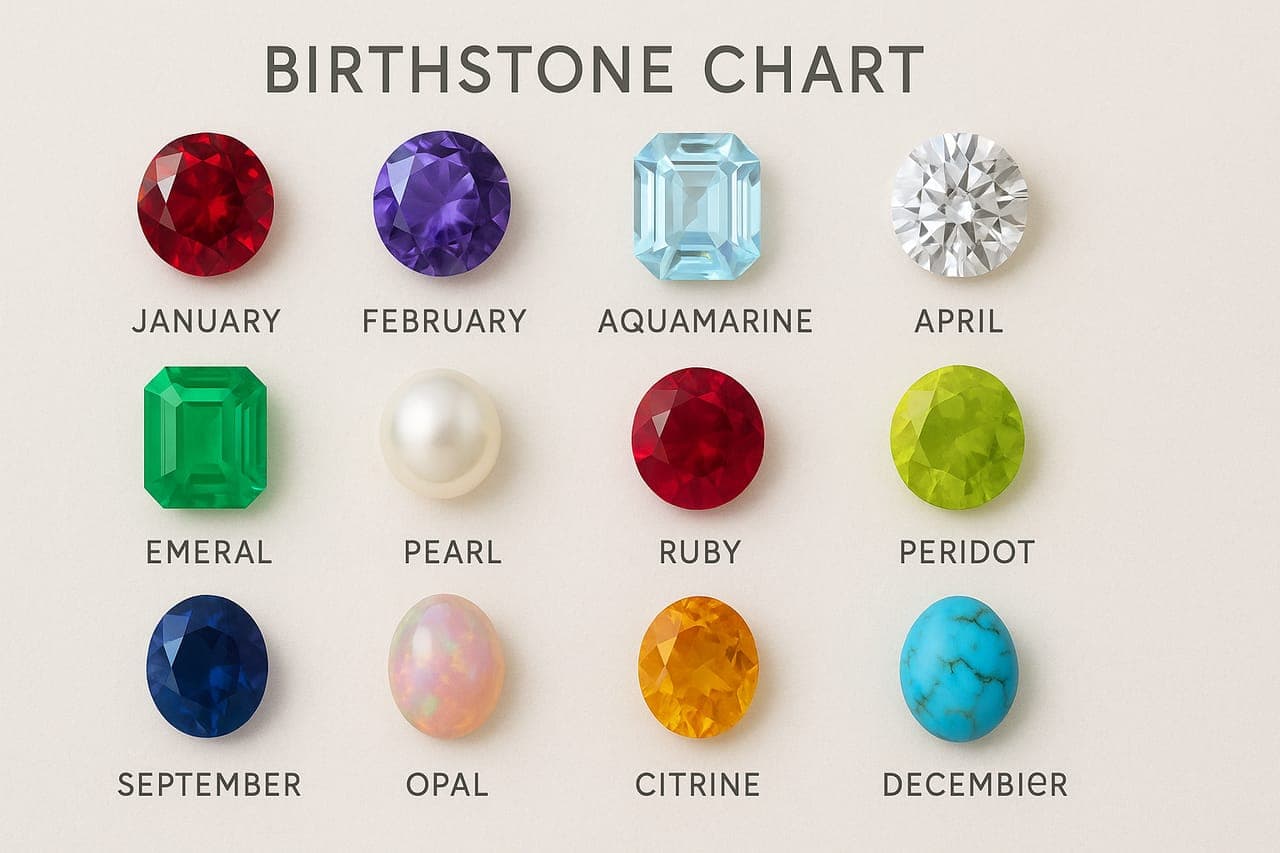
A birthstone can mark a month, but that does not always produce a single answer. The modern U.S. list includes 19 stones across 12 months, while traditional and regional lists can differ. Start with the canonical birthstone chart and source atlas when you need the complete month-to-stone reference. This guide focuses on the next decision: which accepted stone and piece make sense for the wearer.
Start with the list
Ask whether the gift is meant to follow the modern U.S. list, a family tradition or a cultural list. The label matters because the lists are not interchangeable. MyPiece's canonical hub follows the modern U.S. terms maintained by Jewelers of America and labels traditional alternatives separately.
For a month with one modern stone, the list decision is straightforward. For a multi-stone month, each accepted option deserves equal consideration. There is no need to treat the first stone named in a chart as the default.
Choose by colour and traditional meaning
Colour is often the most useful starting point because the wearer can evaluate it immediately. Traditional meanings can add context, but they are associations rather than promises about what a stone will do.
- Choose a colour the wearer already uses in jewellery or clothing.
- Read the meaning as a story attached to the gift, not as a factual effect.
- Consider whether a pale, dark, iridescent or colour-changing stone fits the setting and scale of the piece.
- Check photographs and descriptions for treatment or colour variation before relying on a generic swatch.
The month guides keep colour and meaning attached to each individual stone, including every option in multi-stone months.
Where the choice matters most
June offers pearl, moonstone and alexandrite. Pearl brings a soft lustre, moonstone a moving sheen, and alexandrite a colour-change effect. Their care needs and visual character are different, so the piece type matters as much as the month.
August pairs peridot with spinel. Peridot is characteristically yellow-green; spinel appears in a broader range of colours and is treated as a separate gemstone, not a variety of ruby or sapphire.
October includes opal and tourmaline. Opal is known for play-of-colour and needs thoughtful care. Tourmaline spans many colours, making the exact listing description particularly important.
November includes citrine and topaz. Citrine covers yellow to orange-brown quartz, while topaz occurs in several colours and may be treated, so do not assume every November piece will look alike.
December offers turquoise, tanzanite and blue zircon. Turquoise is opaque, tanzanite is blue-violet, and blue zircon is transparent with strong brilliance. The three choices require different settings and care.
Match the stone to the piece
Hardness measures resistance to scratching. It does not, by itself, decide whether a gemstone belongs in a ring, pendant or pair of earrings.
Rings receive more knocks and abrasion than pendants or earrings. A protective bezel or halo can help shield an exposed edge, while a high prong setting may suit someone who wears the piece less often. Pearls, opals and turquoise benefit from gentler handling. Emerald can be hard but commonly contains fractures, so treatment disclosure and setting security still matter.
For a gift, pendants and stud earrings avoid ring-size uncertainty. Rings and fitted bracelets require more measurements but place the birthstone more prominently.
Read the material description
A responsible listing separates appearance from composition. Look for the base metal, plating, stone identity and any disclosed treatment. Natural, cultured, lab-created and simulated are not synonyms:
- Natural describes material formed without laboratory growth.
- Cultured is the standard term for pearls grown with human intervention inside a mollusc.
- Lab-created describes material grown in a laboratory with the defining composition and structure of its natural counterpart.
- Simulated describes a different material used to imitate a gemstone's appearance.
When the source does not state an origin or treatment, keep it unspecified. Do not infer a natural or lab-created classification from colour, price or a sibling listing.
Plan for care
Store pieces separately so harder stones and metal edges do not abrade softer materials. Remove jewellery before cleaning, swimming or impact-heavy work, and follow treatment-specific advice. The jewellery care guide covers cleaning methods and the situations where a professional inspection is the better choice.
Make the choice personal
Initials, family clusters and milestone stacks can carry more than one stone without forcing a single month or list. Keep the design readable: a small number of deliberate colours usually communicates the relationship more clearly than a crowded setting.
Return to the birthstones by month hub for the canonical 19-stone chart, maintained source geography and links to every month guide.
Frequently asked
- Why do some months have multiple birthstones?
- Birthstone lists developed across different periods and places. The modern U.S. list preserves several accepted options for June, August, October, November and December without making one option more official than the others.
- What is the difference between modern and traditional birthstone lists?
- Traditional lists reflect older customs and vary by source. The modern U.S. list is a maintained trade reference. Both can be useful, but a guide should identify which list it follows.
- Which birthstones are easier to wear frequently?
- Diamond, ruby and sapphire resist scratching well. Softer or more delicate materials such as pearl, opal and turquoise need gentler handling, while any stone can still be damaged by impact or an unsuitable setting.
- Are lab-created stones suitable for birthstone jewellery?
- Yes, where a lab-created counterpart exists. It shares the defining material with its natural counterpart. A simulated stone uses a different material to create a similar appearance, so the listing should distinguish the two.
- How should opal or pearl be cleaned?
- Use a soft, slightly damp cloth and avoid ultrasonic or steam cleaning unless a qualified jeweller confirms it is appropriate for the specific piece. Store the piece separately to limit abrasion.
Sources
- Birthstone Jewelry · Jewelers of America · Accessed
- Birthstones · Gemological Institute of America · Accessed
- Jewelry Guides · Federal Trade Commission · Accessed
- Pearl Care and Cleaning Guide · Gemological Institute of America · Accessed
- Opal Care and Cleaning Guide · Gemological Institute of America · Accessed