Sé & Downtown
Brazil's jewellery corridor — the "Rua do Ouro" by Praça da Sé, 300+ gold, semijoias, and gem shops trading wholesale and retail
Retail & wholesale
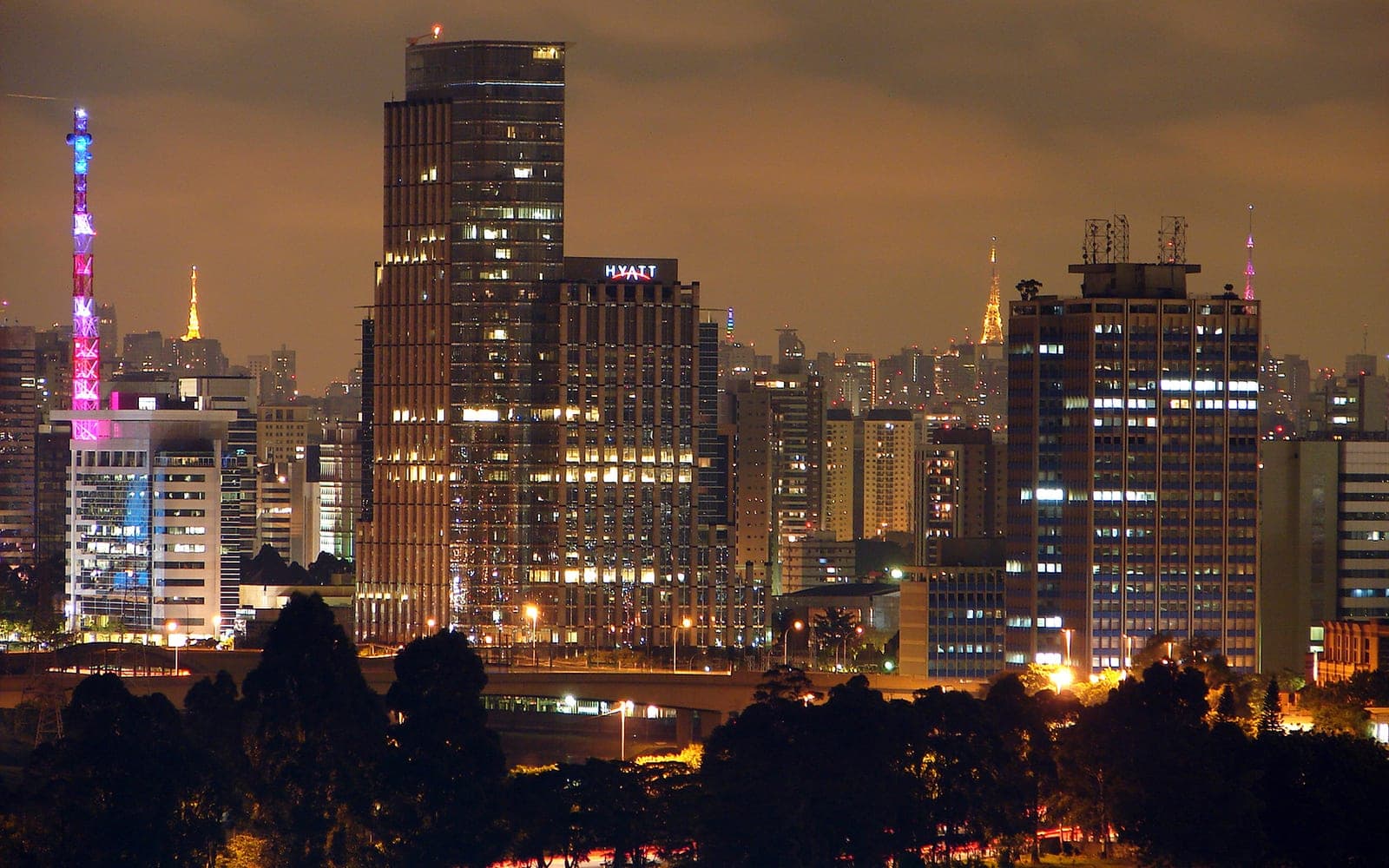
In the historic Centro of São Paulo, beside the Praça da Sé, runs the Rua Barão de Paranapiacaba — known across Brazil as the "Rua do Ouro," the Street of Gold. In about a hundred metres it packs more than 300 gold and semijoias shops, right at the exit of the Sé metro: the concentrated jewellery corridor of the country's largest city.
It mixes manufacturers, wholesalers, and traditional stores that sell direct to the public, at prices well below the mall jewellers — the gold-and-semijoias heart that supplies retailers and buyers across Brazil. The wider downtown, around the famous wholesale street Rua 25 de Março, extends that trade.
Its character is the old Centro's: the eclectic early-20th-century "Dom Luz" building anchors the head of the Rua do Ouro, and family workshops and mid-market jewellers cluster around the cathedral square. Behind it all sits Brazil's gem wealth — amethyst, citrine, topaz, tourmaline, aquamarine, emerald.
Planning to visit or buy in Sé & Downtown?
Getting there and when to go, what a fair price looks like, how to verify what you're buying, and how to spot a fake — the practical, no-nonsense guide.
Read the buyer's guideWorked here
A gemstone is rarely mined, cut, dealt and sold in the same place — those are four different trades. Here is Sé & Downtown's part in that journey: the stones it handles, and exactly what it does with each.
- Source
- mined at or near here
- Cut
- faceted, carved or finished here
- Treat
- heated, irradiated or enhanced here
- Trade
- dealt and wholesaled here
- Sell
- sold to the public here
- AmethystSourceTradeSell
Amethyst was once as rare and royal as ruby — until Brazil's south and neighbouring Uruguay turned up basalt geodes by the tonne in the 1800s and made it a stone anyone could own. Those hollow “cathedral” geodes, taller than a person, are a signature Brazilian export; the rough is mined in Rio Grande do Sul and Bahia, hundreds of kilometres away, then dealt and sold here on São Paulo's Rua do Ouro.
The amethyst gemstone - CitrineSourceTreatTradeSell
Here is the honest secret of the November stone: most “citrine” is amethyst, burnt. Natural golden quartz is genuinely rare, so the trade heats Brazilian amethyst until its purple turns to warm gold — the same crystal, cooked. It's a legitimate, stable treatment sold openly by honest dealers; the pale, unheated natural stone is the collector's exception, not the rule.
The citrine gemstone - TopazSourceTradeSell
Imperial topaz — the amber-pink stone once tied to Brazil's court — comes from essentially one place on Earth: the hills around Ouro Preto in Minas Gerais, worked since the 1730s. By trade convention only that Brazilian stone earns the name “imperial.” Its blue cousin is a different story worth knowing — nearly all blue topaz is colourless topaz turned blue by irradiation and heat, a stable lab colour, not a natural one.
The topaz gemstone - TourmalineSourceCutTradeSell
In 1989 a prospector named Heitor Dimas Barbosa, who had dug for years on a hunch, unearthed an electric neon blue-green tourmaline in the state of Paraíba. Its impossible colour came from copper — a chromophore never before seen in tourmaline — and it created a whole new gem category overnight, still the most valuable tourmaline in the world. One Brazilian pit rewrote the stone's ceiling.
The tourmaline gemstone
Makers & Houses
São Paulo is a trade and sell endpoint for Brazilian coloured stones sourced elsewhere. Its colonial gold-trade point on Rua Barão de Paranapiacaba, known as Rua do Ouro, still concentrates the city's jewellery and loose-stone trade.
The corridor is dominated by hundreds of small, self-listed jewellery and gold stalls with little independent editorial coverage. The named houses below have verifiable addresses and founding facts beyond their own sites.
- Rio Grande do Sul (amethyst)Source
- São Paulo, Rua do OuroTreat
- São Paulo, Rua do OuroSell
Justino Ribas
Known for gold and silver jewellery, made in the same building that houses its shop, office and workshop
A family-run gold and silver jewellery manufacturer on Rua do Ouro, founded in 1951 by the son of Italian immigrants. It has operated from the same building for more than 70 years and is now run by a fifth generation of the family.
João Justino Joias
Known for 18k gold and silver jewellery, with custom orders, repairs and watches
An 18k gold and silver jewellery retailer trading on Rua do Ouro since 1983, offering custom orders and repairs alongside finished jewellery.
Jade Stone
Known for loose Brazilian gemstones, including amethyst, citrine, topaz and tourmaline, for jewellery assembly
A natural-stone and pearl dealer on Rua do Ouro that has sold loose Brazilian gemstones on a wholesale and retail basis for more than 20 years, the district's clearest coloured-stone dealer on the strip itself.
- IBGM (Laboratório Gemológico Dr. Rui Ribeiro Franco). Brazil's national gem-and-precious-metals authority, running a certification lab in São Paulo since 1993. A Verify institution, not a shop.
On the map
- Rua Barão de Paranapiacaba ("Rua do Ouro")
- Praça da Sé
- Rua 25 de Março (wholesale street)
- The Dom Luz building
In the district
Walk the district
Traveller notes
The Sé & Downtown quarter is a practical, lively stop for visitors who want to see Brazil's wholesale jewellery trade in action. Start at Praça da Sé and walk the surrounding blocks: Rua 25 de Março for large malls and bulk suppliers, and Barão de Paranapiacaba (the so-called "Rua do Ouro") for concentrated gold and jewellery shops. Expect a working, local market atmosphere — excellent for trade buyers, bargain seekers, or those researching supply chains — but be mindful of crowds and petty theft in busy areas. For a calmer visit, go on weekday mornings and prefer official storefronts or established shops if you're buying higher-value pieces.
- Best time: Weekday mornings (shops open; lower crowds).
- What to expect: wholesale pricing, semijoias, gold chains, and many small vendors — not luxury flagships.
- Safety: keep valuables secure and use official receipts for purchases.
- Where to learn more: visit established showrooms (see list below) and combine the walk with the São Paulo Cathedral / Praça da Sé landmarks.